
TEST.01
Optical performance
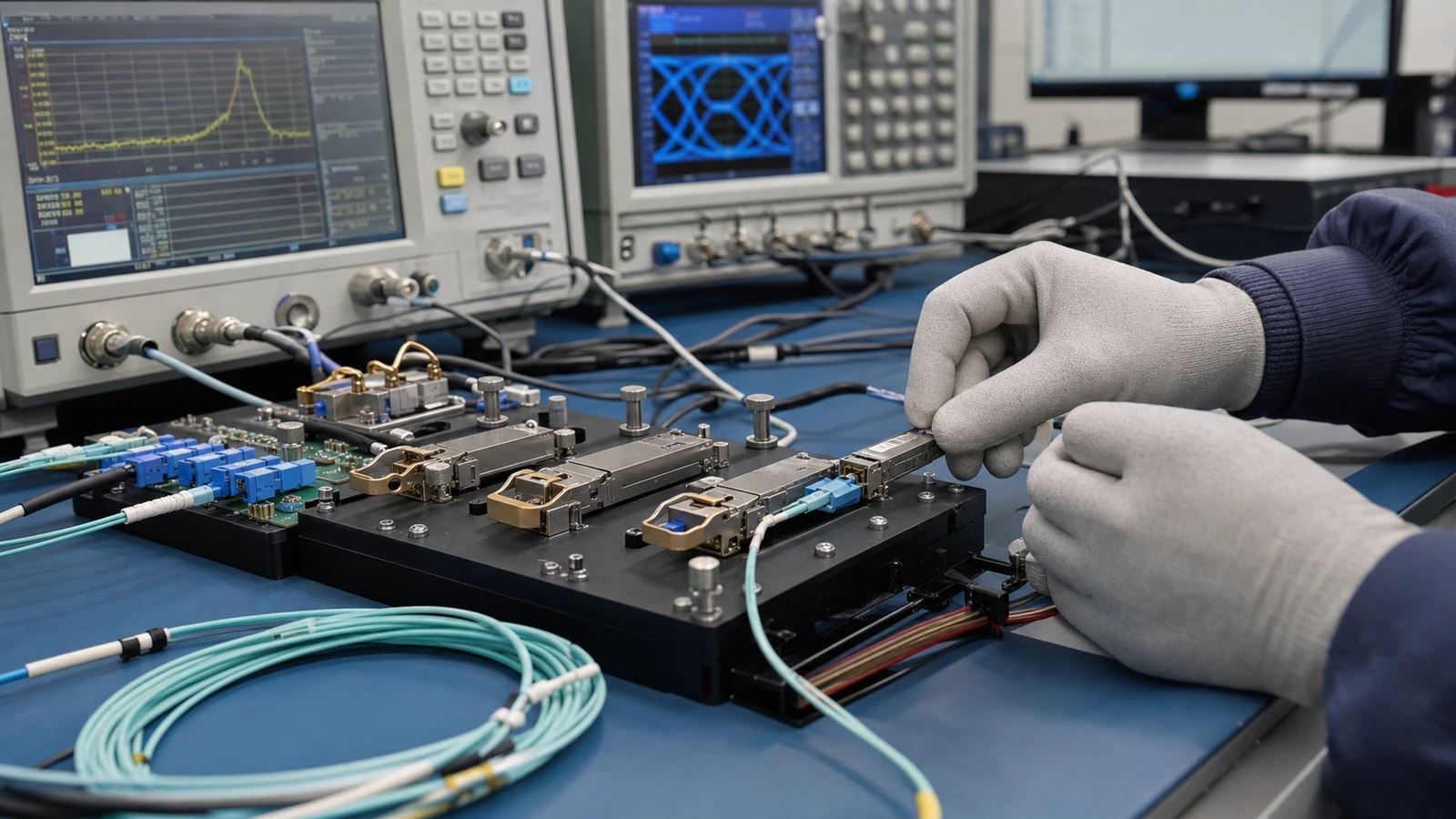
Applicable checks can include transmitted power, wavelength and supported diagnostic readings, interpreted against the selected model specification.
Request test information →From model selection and coding preparation to optical review, host-platform checks and final inspection, the project scope stays connected to the product you intend to deploy.

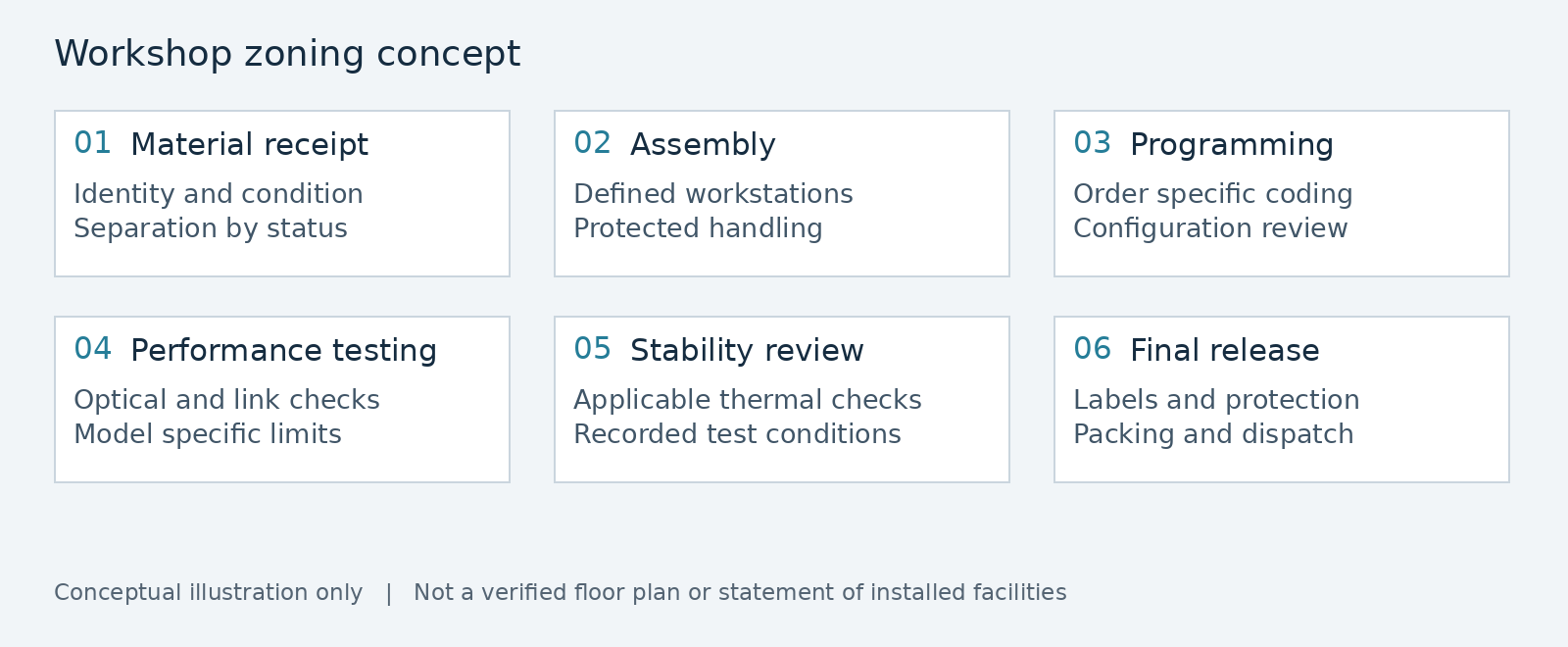
A transceiver needs to match the optical link, communicate with the host platform and arrive with the identification and documentation required for deployment. The exact activities are agreed for the selected product and order.
Optical transceivers, DAC and AOC cables, fibre patch cords, media converters and coding solutions can be reviewed within one project conversation.
A useful result records what was tested, in which configuration and against which product requirement. Test coverage and report availability are confirmed case by case.
Applicable checks can include transmitted power, wavelength and supported diagnostic readings, interpreted against the selected model specification.
Request test information →
Review can cover module recognition, link establishment, available diagnostics and traffic behaviour in the agreed host context.
Start a compatibility review →
Data rate, lane configuration, host interface and relevant error criteria should be defined before functional or BER evidence is requested.
Request technical review →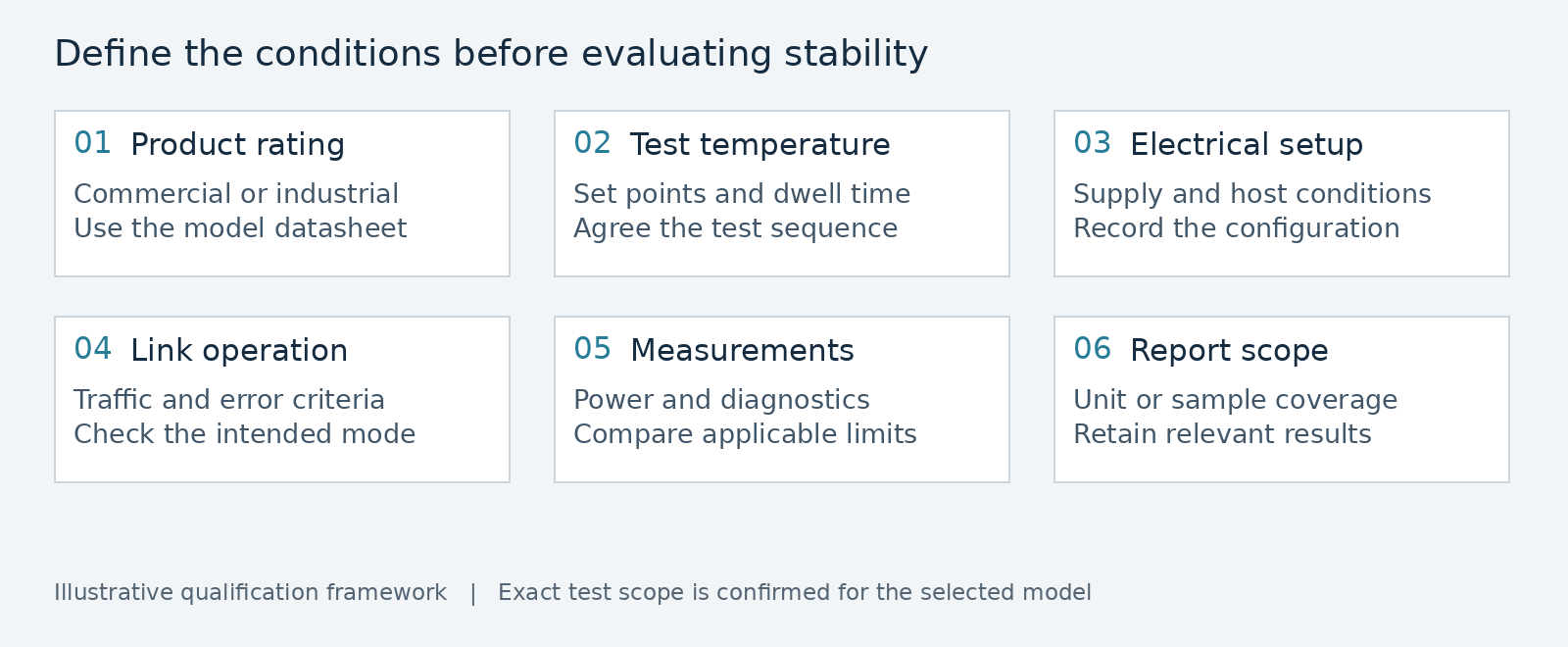
Commercial- and industrial-temperature products may require different review conditions. A project-specific request should identify the module, host or fixture, operating mode, optical connection and required report scope.
The applicable activities depend on the product family and project. Keeping each checkpoint connected to the model specification makes the result useful to engineering and procurement teams.
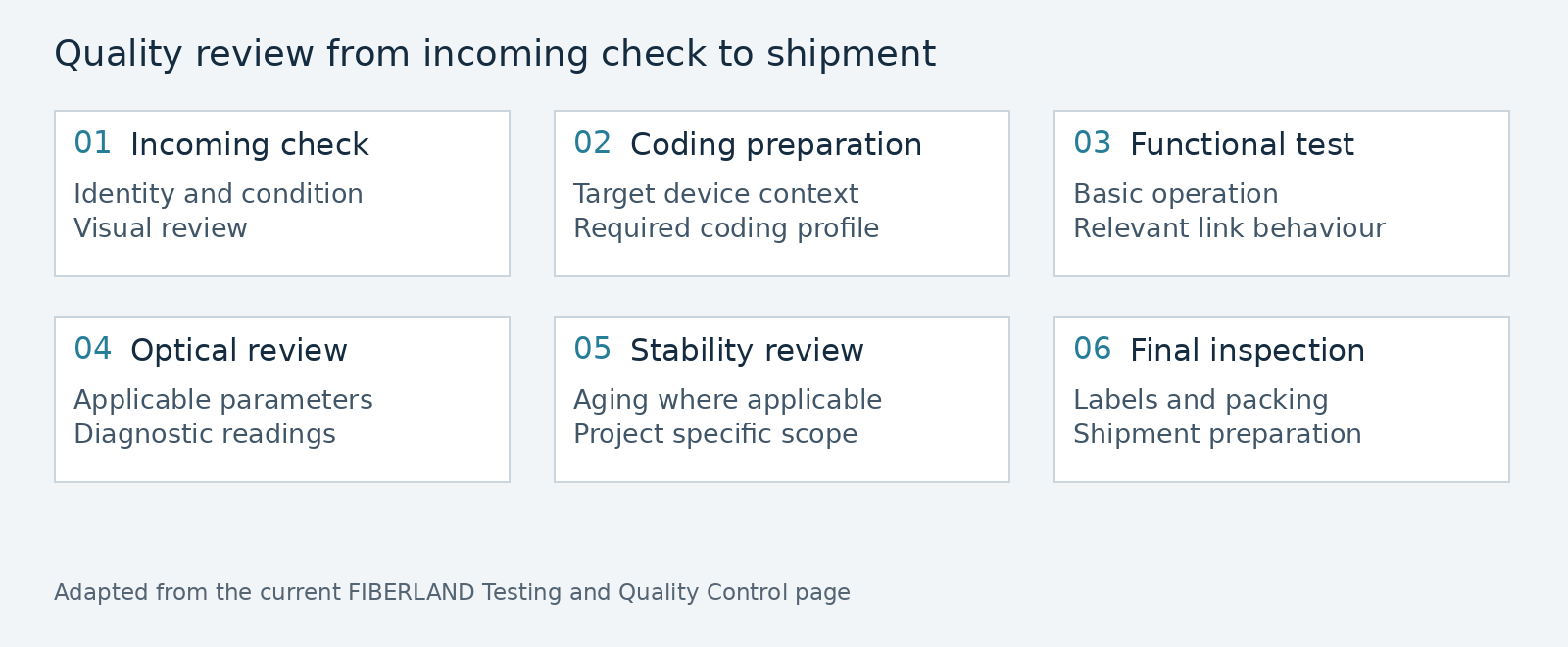
Check product identity, visible condition, labels, packaging and available records.
Bring the target-device context into the order where platform coding is required.
Review basic operation and relevant link behaviour for the agreed configuration.
Check applicable parameters and supported diagnostic readings.
Apply aging or temperature review when required by the product and project.
Confirm identity, requested labels, packaging, documents and shipment preparation.
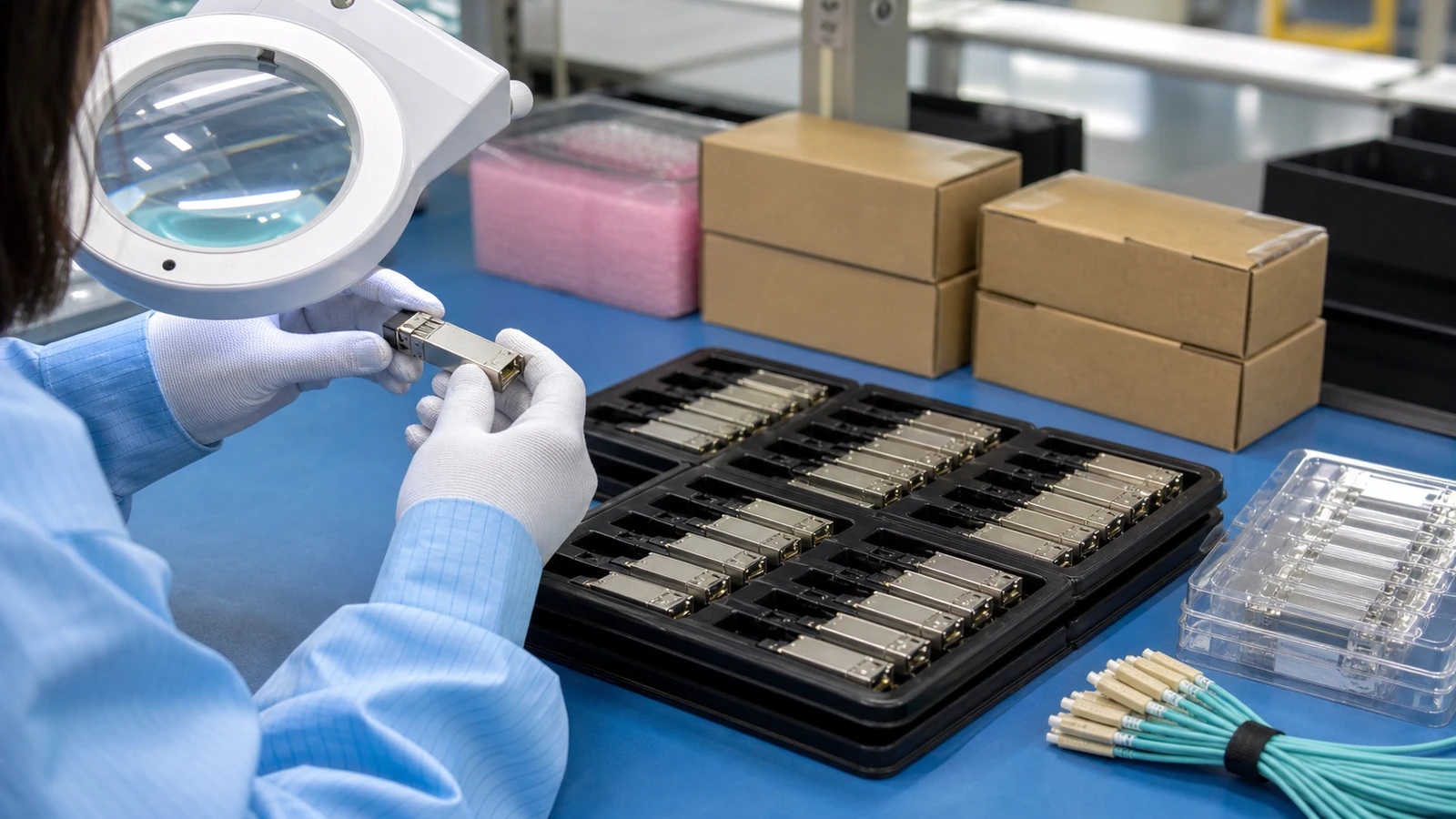
Modules that look similar may serve different links. Clear identification, protective packing and order-specific documents help receiving teams distinguish the supplied models and retain the information needed for later support.
Share the exact product, target equipment and intended use so the team can confirm which records are available and what they cover.
Review model specifications, connector, reach, wavelength and operating conditions.
Connect the product selection to the target device, port and firmware context.
Ask for the applicable optical, diagnostic, functional or stability scope.
Agree required identifiers, batch coverage and document format before production.
Scope note: report availability, test conditions and record coverage are confirmed for the selected product and project; a general visual does not establish universal equipment or test coverage.
Send the required speed and reach, product or OEM reference, target equipment and firmware, fibre and connector type, quantity, destination and timing. Include any report, label or packaging requirements.